

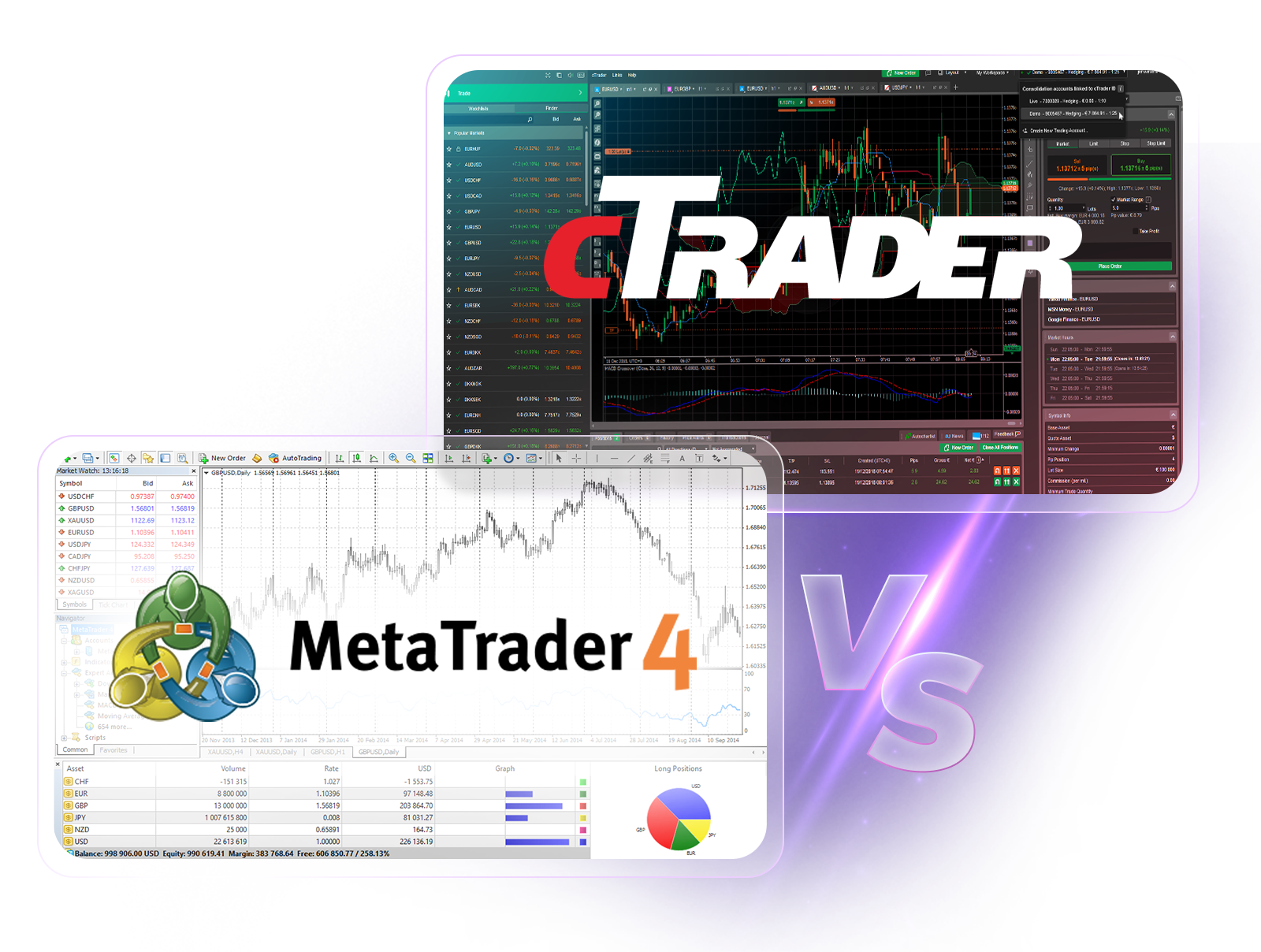
Choosing Between MetaTrader and cTrader: Why It Matters?
The choice of trading platform is one of the most consequential decisions a forex or CFD broker makes. It shapes everything from the client experience and the instruments you can offer, to the technology stack you need to manage, the liquidity connectivity options available to you, and the ongoing operational requirements of running your business. Get it right and your platform becomes a competitive advantage. Get it wrong and you face years of operational friction, client complaints, and the cost and disruption of migrating to a different platform later.
MetaTrader and cTrader are the two dominant platforms in the retail forex and CFD brokerage industry. Both are mature, well-supported, and widely used – but they are fundamentally different products with different strengths, different client profiles, and different operational implications for the broker. This guide explains what those differences are, who each platform is best suited for, and how to make the right choice for your specific business model.
MetaTrader: The Industry Standard
MetaTrader 4 and MetaTrader 5 are developed by MetaQuotes Software and have been the dominant platforms in retail forex brokerage for over two decades. MT4 was released in 2005 and rapidly became the global standard for retail forex trading. MT5 followed in 2010 with a broader feature set and multi-asset capability. Together they power the vast majority of retail forex and CFD brokerages worldwide.
What MetaTrader Does Well
MetaTrader’s dominance is not accidental. It has earned its position through a combination of features that are genuinely well-suited to the needs of retail forex and CFD brokers:
- Universal client recognition – MetaTrader is the platform that retail forex traders worldwide know and expect. Many experienced traders will simply not open an account with a broker that does not offer MT4 or MT5. This client recognition is a powerful commercial advantage that should not be underestimated.
- Extensive plugin and tool ecosystem – MetaTrader has the most developed ecosystem of third-party plugins, tools, and add-ons of any retail trading platform. This ecosystem – covering everything from risk management tools and reporting systems to copy trading solutions and custom indicators – gives brokers enormous flexibility to extend and customise their platform beyond its standard capabilities.
- Algorithmic trading and Expert Advisors – MetaTrader’s MQL4 and MQL5 programming languages have produced the largest library of automated trading strategies and custom indicators in the industry. Traders who use automated strategies almost universally do so on MetaTrader.
- Broad liquidity bridge compatibility – every major liquidity bridge solution – oneZero, FXCubic, Centroid, PrimeXM – supports MetaTrader natively. LP connectivity is straightforward and well-tested across the ecosystem.
- Flexible execution model support – MetaTrader’s architecture supports A-book, B-book, and hybrid execution models with full dealer desk functionality, giving brokers complete flexibility over how they manage client flow.
- MT5 multi-asset capability – MT5 supports equities, futures, and options alongside forex and CFDs, making it suitable for brokers who want to offer a broader instrument range beyond standard forex and CFD products.
MetaTrader’s Limitations
- Dated user interface – the MetaTrader client terminal – particularly MT4 – has an interface that has not fundamentally changed in many years. Compared to modern trading applications it can feel dated, which is a disadvantage when competing for tech-savvy younger traders who expect a more polished user experience.
- MetaQuotes licensing costs and restrictions – MetaTrader is a licensed product from MetaQuotes, and the licensing relationship comes with costs and restrictions that some brokers find constraining. MetaQuotes has also tightened its licensing requirements in recent years, making it harder for new brokers to obtain a license directly.
- Limited transparency features – MetaTrader’s architecture gives the broker significant control over execution and pricing, which is commercially valuable but can be a disadvantage in markets where clients increasingly expect and demand execution transparency.
- Complexity of platform management – managing a MetaTrader environment correctly – keeping server configurations updated, managing swap rates, handling corporate actions, maintaining bridge connectivity, and producing accurate reports – requires specialist knowledge that many brokers underestimate when they first set up their platform.
cTrader: The Transparency-First Alternative
cTrader is developed by Spotware Systems and was designed from the ground up as a transparent, ECN-focused alternative to MetaTrader. It has grown significantly in adoption over the past decade and is now the clear second platform of choice for retail forex and CFD brokers worldwide.
What cTrader Does Well
- Modern, polished user interface – cTrader’s client terminal is widely regarded as having a significantly more modern and intuitive interface than MetaTrader. This is a genuine competitive advantage with younger, more tech-savvy traders who compare platforms on user experience as much as on trading conditions.
- Built-in transparency features – cTrader was built around the concept of execution transparency. It displays execution quality statistics, slippage data, and fill time information directly to the client – which is a powerful trust signal for brokers who want to position themselves on execution quality.
- Native cTrader Copy – cTrader includes a built-in copy trading system that is more seamlessly integrated than most third-party copy trading solutions available for MetaTrader. For brokers who want to offer copy trading as a core feature this is a significant advantage.
- cAlgo and C# programming – cTrader’s algorithmic trading framework uses C#, which is a mainstream programming language with a much larger developer pool than MQL4 or MQL5. This makes it easier to find developers to build custom automated strategies and indicators on cTrader.
- Integrated LP connectivity – cTrader handles LP connectivity through its native cBroker system rather than requiring a separate bridge application, which can simplify the technology stack for brokers who prefer a more integrated approach.
- Spotware’s licensing model – cTrader’s licensing model is generally considered more accessible and less restrictive than MetaQuotes’ approach, which has made it an attractive option for brokers who face challenges obtaining a MetaTrader license.
cTrader’s Limitations
- Smaller client base and recognition – despite significant growth, cTrader is still considerably less well-known among retail traders than MetaTrader. Many experienced retail traders specifically seek out MetaTrader brokers and will not consider brokers who only offer cTrader.
- Smaller plugin and tool ecosystem – while cTrader’s ecosystem is growing, it is still significantly smaller than MetaTrader’s in terms of third-party tools, plugins, and add-ons. Brokers who rely on specific third-party risk management or reporting tools may find fewer options available for cTrader environments.
- Smaller EA and indicator library – the library of ready-made automated strategies and custom indicators available for cTrader is a fraction of what is available for MetaTrader. Traders who depend on specific Expert Advisors or indicators may not find equivalents on cTrader.
- B-book execution complexity – cTrader’s architecture is designed around transparency and ECN execution, which can make implementing a B-book or hybrid execution model more complex than on MetaTrader where these models are a native part of the platform’s design.
Head-to-Head Comparison
| Factor | MetaTrader (MT4/MT5) | cTrader |
|---|---|---|
| Client recognition | Very high – global standard | Growing but lower than MT |
| User interface | Functional but dated (MT4) / improved (MT5) | Modern and polished |
| Algorithmic trading | Largest EA and indicator library | C# based – growing library |
| Plugin ecosystem | Very large and mature | Smaller but growing |
| LP connectivity | Via external bridge (oneZero, FXCubic etc.) | Native via cBroker |
| Copy trading | Via third-party solutions | Native cTrader Copy |
| Execution transparency | Limited native transparency | High – built-in stats |
| A/B book flexibility | Full flexibility natively | More complex to implement |
| Multi-asset support | MT5 supports equities, futures, options | Forex and CFDs primarily |
| Licensing | MetaQuotes – stricter and more costly | Spotware – more accessible |
| Platform management complexity | High – requires specialist knowledge | Medium – more integrated |
Which Platform is Right for Your Brokerage?
Choose MetaTrader if:
- Your target clients are experienced retail forex traders who expect MT4 or MT5 as standard
- You want access to the broadest possible ecosystem of third-party tools, plugins, and liquidity bridges
- You are running a hybrid execution model and need the full flexibility of MetaTrader’s dealer desk architecture
- You want to offer algorithmic trading with access to the largest library of ready-made Expert Advisors and indicators
- You are launching an MT5 brokerage with a multi-asset instrument range including equities and futures
- Your existing client base is already on MetaTrader and migration is not a realistic option
Choose cTrader if:
- You want to differentiate on execution transparency and use this as a core part of your marketing proposition
- Your target clients are younger, more tech-savvy traders who value a modern user experience
- You want native copy trading functionality without the complexity of integrating a third-party solution
- You are building an ECN or STP brokerage where transparency is central to your brand
- You are facing challenges obtaining a MetaTrader license and need a viable alternative
- You want a simpler, more integrated technology stack without a separate bridge application
Consider Running Both
Many established brokers run both MetaTrader and cTrader simultaneously – offering clients the choice of platform and capturing the widest possible client base. This approach has real commercial merit but comes with operational complexity – managing two separate platform environments, two separate liquidity connectivity setups, and two separate reporting and risk management workflows. Brokers who take this approach typically need either a dedicated in-house operations team or an outsourced partner with expertise across both platforms.
The Operational Reality of Platform Management
Whichever platform you choose, the reality of managing it correctly is more demanding than most brokers anticipate. Both MetaTrader and cTrader require ongoing technical expertise to maintain at the level needed to deliver a reliable, competitive client experience. Swap rates need regular updating. Corporate actions need processing accurately and on time. Instrument specifications need monitoring and adjustment. Bridge connectivity and LP relationships need ongoing management and optimisation. Reporting needs to be produced accurately by people who understand the platform’s data architecture.
For brokers who do not have the in-house expertise to manage these requirements effectively, outsourcing platform management to a specialist provider is an increasingly popular and cost-effective approach. Broktinger provides professional platform management services across both MetaTrader and cTrader environments – covering everything from initial setup and LP integration through to ongoing daily management, dealing desk coverage, risk management, and reporting. Learn more about our MetaTrader support service and our cTrader support service.
Related Services and Products
Whichever platform you choose, Broktinger can help you set it up correctly and manage it professionally:
- MetaTrader Support – full MT4 and MT5 platform setup, configuration, and ongoing management
- cTrader Support – cTrader platform setup, LP connectivity, and ongoing management
- Dealing Desk – outsourced dealing desk coverage across MetaTrader and cTrader environments
- Risk Management – ongoing risk oversight and exposure management across both platforms
- Reporting Services – professional brokerage reporting produced by experienced dealers and analysts
- Liquidity Bridge Support – bridge setup, configuration, and ongoing management for MetaTrader brokers
- Swap Changer – automated swap rate management for MetaTrader platforms
- Spread Report – automated spread analysis across instruments and sessions
Need Help Choosing or Setting Up Your Platform?
If you are in the process of choosing between MetaTrader and cTrader – or if you are already running one or both platforms and need professional support to manage them more effectively – get in touch with our team. We have extensive hands-on experience across both platforms and can give you an honest assessment of which is the better fit for your specific business model, client base, and operational requirements.
Leave a Reply